Celebrating how every child thinks, moves, and learns—supporting regulation, participation and confidence through playful, evidence-based therapy.
At Little Wings OT Clinic, we believe every child has their own unique flight path. Our multidisciplinary team supports children with through evidence-based, playful, child-led therapy by nurturing strengths, building connection, and supporting meaningful participation in everyday activities.
At Little Wings Occupational Therapy Clinic, we believe every child brings their own strengths, interests, and ways of engaging with the world. Our goal is to support children in building the skills, confidence, and independence they need to participate meaningfully in daily life—at home, in school, and in their communities.
We are a specialised paediatric therapy centre where play, science, and compassionate care come together. Each therapy plan is thoughtfully designed around the child’s individual profile, interests, and family goals.
Our work is guided by well-established developmental and therapeutic frameworks, including DIR® Floortime principles, the Ayres Sensory Integration® framework, the Neurodevelopmental Approach (NDT), and neurodiversity-affirming practices. These approaches help us understand how children process sensory information, develop movement and motor skills, build relationships, and regulate their emotions.
By integrating these approaches, we create therapy experiences that are playful, responsive, and developmentally supportive, helping children expand their abilities while feeling safe, understood, and empowered.
Our qualified therapists support children with:
If you’re concerned about your child’s development or participation in everyday activities, our team is here
At Little Wings Occupational Therapy Clinic, we believe children thrive when their individual differences are understood, respected, and supported. Our approach is guided by thoughtful, evidence-informed care and a deep commitment to each child and family.
Children learn best through play. Our therapy sessions use engaging, child-led activities that make learning enjoyable while supporting developmental growth and skill building.
Every child is unique. Therapy goals are thoughtfully designed around each child’s strengths, sensory profile, and learning style to support meaningful progress in everyday life.
Parents and caregivers are essential partners in therapy. We collaborate closely with families, offering guidance and practical strategies so children can continue building skills at home, school, and in the community.
Our therapy is guided by research-informed approaches, including DIR® Floortime principles, Ayres Sensory Integration®, and neurodevelopmental frameworks, etc., ensuring interventions are both effective and developmentally supportive.
We celebrate differences in how children think, move, and learn. Our goal is not to “fix” children but to support their strengths, autonomy, and confidence while supporting and guiding them navigate daily life successfully.
We believe in a team approach. We collaborate with teachers, psychologists, speech therapists, and other professionals to ensure children receive consistent and holistic support.
At Little Wings, we believe every child deserves to feel understood, capable, and valued for who they are. Childhood is not only about reaching milestones—it is about discovering interests, building relationships, and experiencing the world with confidence and curiosity.
Our philosophy is grounded in the belief that development happens best in the context of connection, play, and meaningful experiences. We take the time to understand each child’s unique strengths, sensory preferences, and ways of communicating so therapy feels supportive rather than overwhelming.
Guided by evidence-based practice and neurodiversity-affirming values, we create opportunities for children to explore, problem-solve, and develop new skills in ways that feel natural and motivating.
We see therapy as a collaborative journey with families, where small moments of growth—trying something new, expressing a need, gaining confidence—are celebrated as meaningful steps forward.
Our goal is to help children build the skills, confidence, and independence they need to participate in daily life while honouring their individuality.
Comprehensive support across multiple areas of functioning for home, school, and social life.
Occupational therapy supports children in developing the skills they need to participate confidently in everyday activities such as play, learning, self-care, and social interaction. At Little Wings, our therapy focuses on strengthening the sensory, motor, cognitive, play skills and emotional foundations that help children become more independent and engaged in daily life. Through play-based, child-led, and evidence-informed therapy, we work with each child’s unique strengths to support meaningful participation at home, school, and in the community.
Sensory Processing & Regulation, Sensory processing differences, Emotional regulation and coping skills, Sensory modulation and tolerance, Attention and arousal regulation, Motor Skills Development, Fine motor skills and hand strength, Gross motor coordination, Motor planning and praxis, Bilateral coordination, Postural control and core strength, Balance and body awareness, Visual-Motor & School Skills, Organisation and task completion, Feeding, Play & Social Participation
Speech and language therapy supports children in developing the skills needed to communicate, understand language, and connect with others. At Little Wings, we focus on helping children express their thoughts, needs, and ideas while building confidence in social interactions.
Speech Development, Language Development, Social Communication, Pragmatic language skills, Early Communication Skills, Alternative & Augmentative Communication (AAC)
Our psychology services support children’s emotional wellbeing, behaviour, and social development in a safe, supportive, and child-friendly environment. At Little Wings, our child psychologist works closely with children and families to help them understand their feelings, build coping skills, and develop positive relationships. Using evidence-based and developmentally appropriate approaches, sessions may include play, conversation, and structured activities that help children express themselves and learn practical strategies for everyday challenges.
Emotional Development, Behavioural Support, Emotional Regulation, Social Skills & Relationships, Anxiety & Emotional Wellbeing, Self-Awareness & Identity, Parent coaching and collaborative strategies, Supporting behaviour and emotional needs at home
Our special education services help children build strong learning foundations and succeed academically by tailoring teaching strategies to each child’s individual strengths and learning style. At Little Wings, we focus on making learning engaging, meaningful, and achievable, so children can gain confidence and enjoy school.
Literacy Skills, Math & Numeracy, Learning & Cognitive Skills, Self-advocacy and independence in learning, Multi-sensory and evidence-based learning strategies, Collaborative support with teachers and parents
Our Early Intervention program supports children during their most critical years of development, the time when the brain is most adaptable and forming the neural connections that support movement, communication, learning, and social interaction. Research shows that early, targeted interventions can significantly improve developmental outcomes and functional participation (Shonkoff & Phillips, 2000).
During the early years, structured exposure to sensory experiences, guided play, and meaningful daily activities strengthens brain connections, enhances motor, cognitive, and social development, and increases a child’s ability to participate in everyday routines. Evidence shows that multidisciplinary early intervention leads to better outcomes in communication, behaviour, and independence (Guralnick, 2017).
At Little Wings, our youngest learners benefit from a comprehensive, team-based approach. Occupational therapists, speech therapists, special educators, and behavioural therapists collaborate to ensure interventions are coordinated, developmentally appropriate, and informed by research. This integrated approach has been shown to accelerate skill acquisition and improve school readiness.
Transitions & Structure
Joint Attention & Play
Balance & Coordination
Cognitive Foundations
"Ensuring every child transitions to school with the confidence and skills needed to participate fully in their community."
Small-group sessions led by Occupational Therapists to foster social learning and peer motivation.
Our Handwriting Skills Group helps children develop the foundational skills needed for legible, and efficient handwriting. Using a whole-child approach, occupational therapists target core postural stability, hand and finger strength, fine motor precision, visual-motor integration, bilateral coordination, motor planning, and sensory regulation—skills that are essential for fluent writing. Sessions are play-based, structured, and carefully tailored to child’s current abilities, gradually building writing fluency in a fun and engaging way. The small group format encourages peer interaction and motivation, turning repetitive practice into a social and enjoyable experience, while therapists provide guidance to ensure each child is supported in mastering proper pencil grip, letter formation, spacing, and endurance. By combining evidence-based strategies, graded activities, and playful learning, this program helps children gain both the skills and confidence they need to succeed in school and everyday writing tasks.
"Encourages improved participation in classroom tasks through shared success and peer-supported learning."
"By combining evidence-based OT strategies, structured challenges, and fun, engaging activities, this program strengthens foundational motor, sensory, and executive function skills that support participation in play, school, and everyday routines."
Our Super Movers Group is designed to help children develop motor planning (praxis), coordination, body awareness, and regulation through high-energy, play-based activities. Using a whole-child approach, occupational therapists support core OT skills including bilateral coordination, sequencing of actions, balance, spatial awareness, and adaptive problem-solving, all of which are essential for navigating daily life independently and confidently.
Children engage in obstacle courses, movement games, bilateral coordination tasks, and complex problem-solving through active play, providing opportunities to explore movement in a safe, structured, and motivating environment. The group format encourages peer observation and interaction, helping children build confidence, flexibility, and social learning, while therapists guide them to successfully plan and execute movements, adapt to new challenges, and regulate their bodies and emotions during activity.
Our Visual–Perceptual Skills Group helps children develop the ability to interpret and respond to visual information, a key skill that supports tasks such as reading, writing, navigating spaces, and completing everyday activities. Using a play-based, structured approach, occupational therapists target foundational skills including visual discrimination, visual memory, visual sequencing, spatial awareness, hand-eye coordination, and visual-motor integration.
Children participate in puzzles, mazes, building tasks, and creative art activities, which challenge them to plan, organise, and problem-solve while maintaining focus and attention. The small group format encourages peer learning, social interaction, and motivation, turning challenging tasks into engaging and enjoyable experiences.
By strengthening these visual–perceptual skills, children gain the confidence and abilities needed for school tasks, daily routines, and functional activities, laying a strong foundation for success in learning, play, and everyday life.
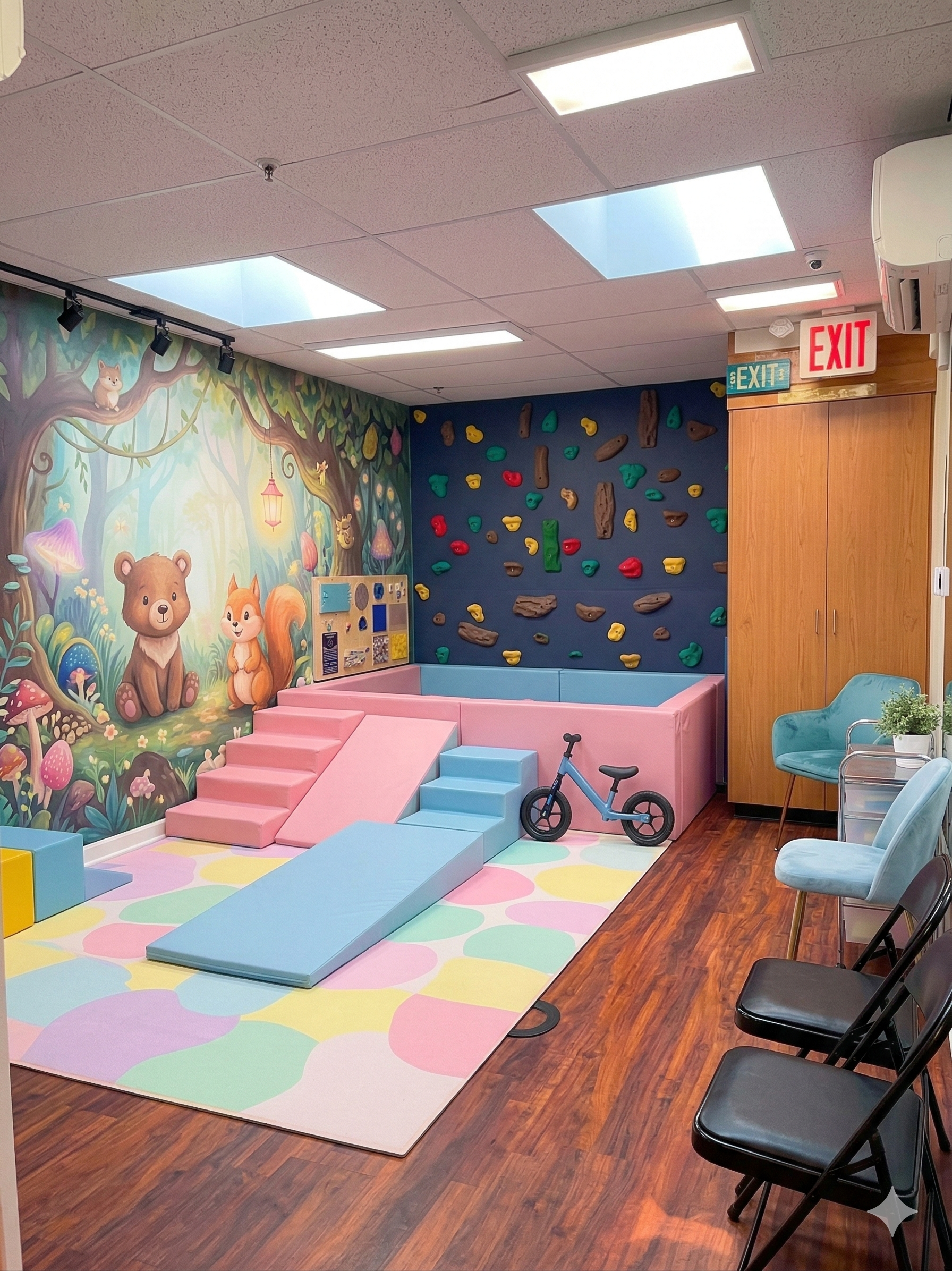
A 15-minute discovery call to ensure we are the right fit for your needs.
Comprehensive testing of motor, sensory, and functional skills.
We build a collaborative plan with the family and the child.
Ongoing play-based sessions with regular progress reviews.